$45.00
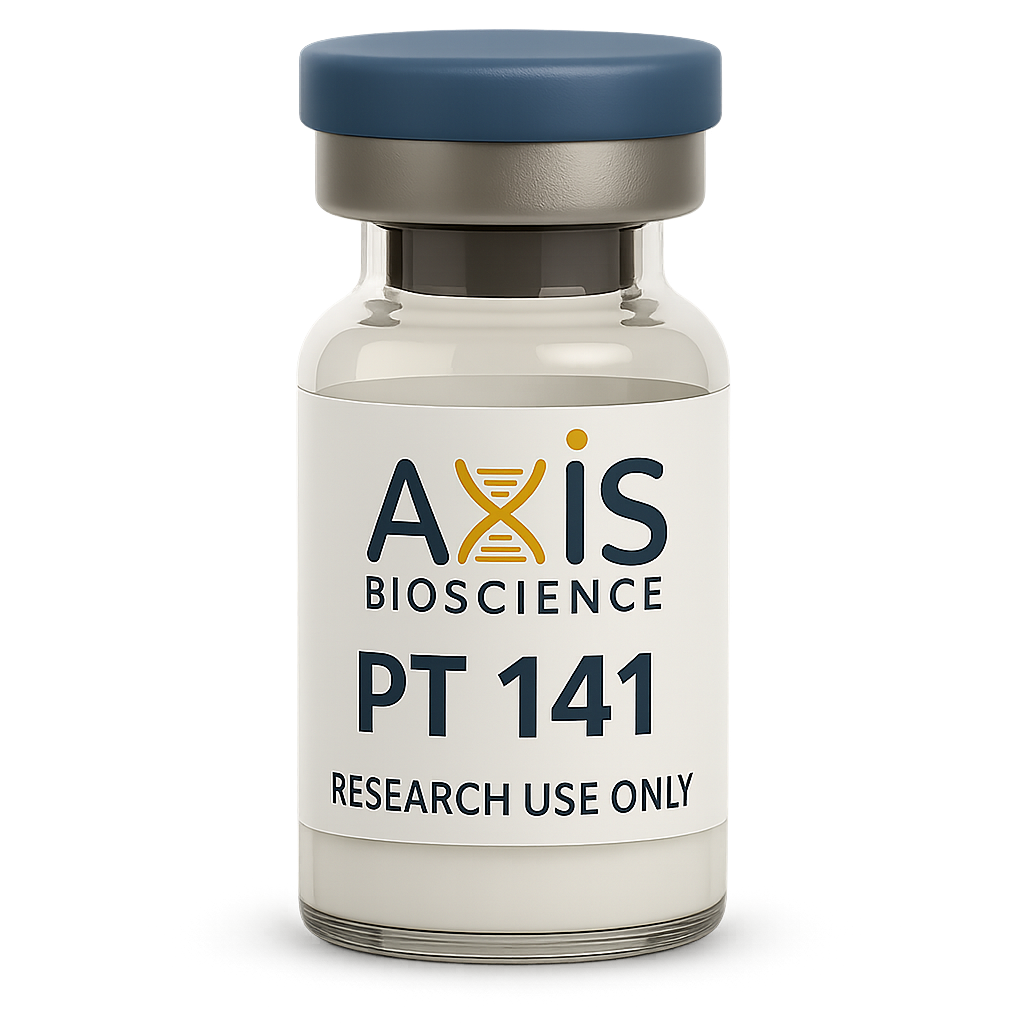
PT-141 (Bremelanotide) is a cyclic research peptide studied in laboratory and preclinical models for its role in melanocortin receptor signaling and central nervous system pathway interactions. Supplied as a lyophilized powder for research use only.
In stock (can be backordered)
| Quantity | Discount | Discounted price |
| 3 - 4 | 6% | $42.30 |
| 5 + | 10% | $40.50 |
Free shipping on orders over $200!
- Buy 3+ save 6% · Buy 5+ save 10%
- Secure Ordering
PT-141, 10mg also known as Bremelanotide, is a synthetic cyclic peptide derived from alpha-melanocyte-stimulating hormone (α-MSH). In laboratory and preclinical research settings, PT-141 has been studied for its activity as a melanocortin receptor agonist, particularly involving central nervous system signaling pathways.
Unlike peptides that primarily influence vascular or peripheral mechanisms, PT-141 is examined in research models for its effects on melanocortin receptor pathways associated with neurological and behavioral signaling. This product is supplied as a lyophilized powder intended strictly for laboratory research use.
⚠️ Research Use Only – Compliance Notice
- Central nervous system melanocortin signaling
- Melanocortin receptor (MC1R, MC3R, MC4R) pathway studies
- Neurotransmitter and behavioral signaling research
- Motivation and reward pathway models
- Hypothalamic signaling and neuroendocrine research
- Sex-differentiated neurological response studies
- Autonomic nervous system research contexts
Compound Name: PT-141 (Bremelanotide)
Peptide Classification: Cyclic melanocortin receptor agonist
Amino Acid Length: 7 (cyclic)
Molecular Formula: C50H68N14O10
Molecular Weight: ~1025.2 g/mol
CAS Number: 189691-06-3
Form: Lyophilized powder
Solubility: Soluble in water under laboratory conditions
- Store at -20°C for long-term stability
- Refrigeration (2–8°C) acceptable for short-term storage
- Avoid repeated freeze-thaw cycles
- Protect from light and moisture
- Reconstituted material should be aliquoted to preserve integrity
- Handle using standard laboratory safety protocols