$29.00
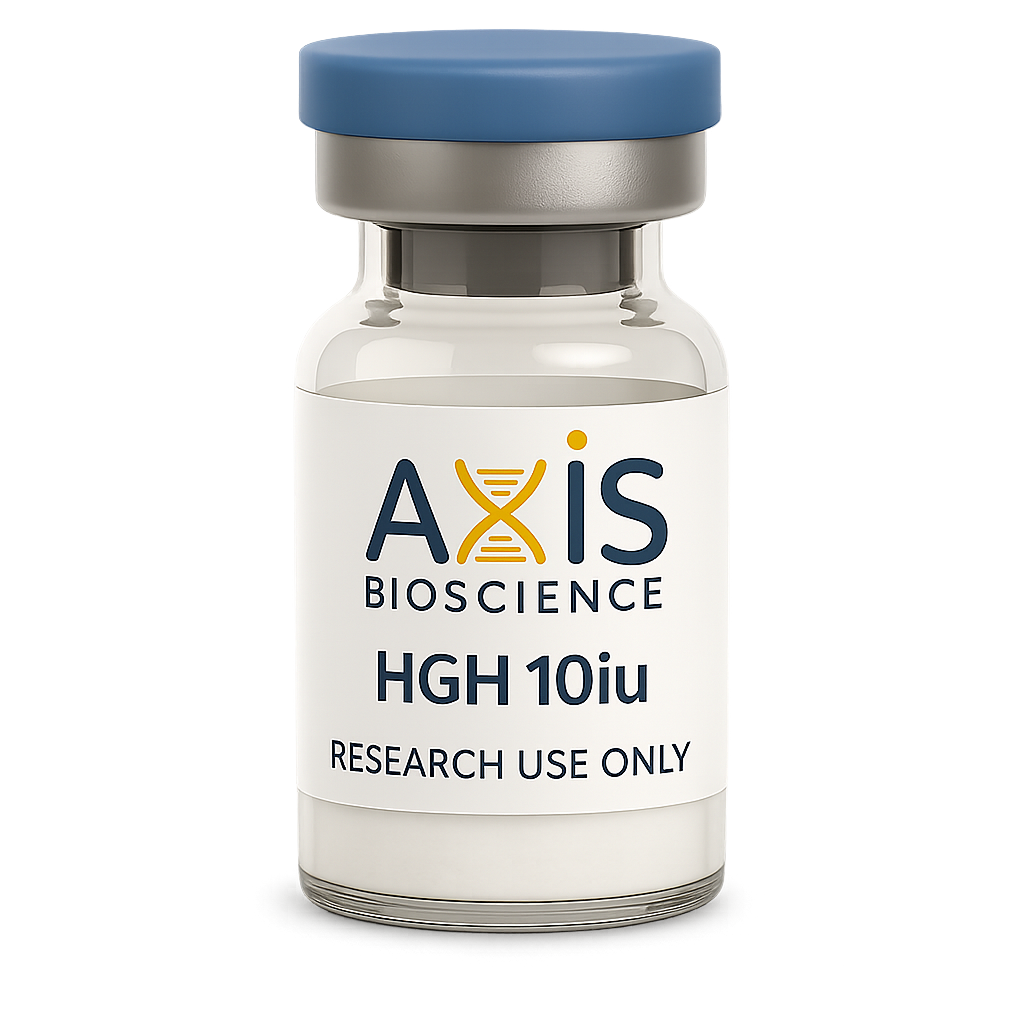
HGH (Somatropin) is a recombinant growth hormone studied in laboratory and preclinical models for its role in growth signaling, endocrine regulation, and cellular metabolism pathways. Supplied as a lyophilized powder for research use only.
One catalog consistency note: I’d use “10 IU” in the product title and attributes, but if your supplier’s labels use “10iu”, keep the storefront naming identical to the label to avoid customer confusion.
Available on backorder
| Quantity | Discount | Discounted price |
| 3 - 4 | 6% | $27.26 |
| 5 + | 10% | $26.10 |
Free shipping on orders over $200!
- Buy 3+ save 6% · Buy 5+ save 10%
- Secure Ordering
Human Growth Hormone (HGH), also known as Somatropin, is a recombinant form of the naturally occurring peptide hormone produced by the anterior pituitary gland. In laboratory and preclinical research settings, HGH has been studied extensively for its role in growth signaling, cellular metabolism, tissue development, and endocrine regulation.
As a key component of the growth hormone and insulin-like growth factor (IGF-1) axis, HGH is frequently utilized in research models investigating anabolic signaling pathways, cellular growth mechanisms, and age-related endocrine function. This product is supplied as a lyophilized powder intended strictly for laboratory research use.
⚠️ Research Use Only – Compliance Notice
- Growth hormone and IGF-1 signaling research
- Cellular growth and proliferation studies
- Muscle and connective tissue research models
- Endocrine regulation and feedback pathway studies
- Metabolic function and nutrient utilization research
- Bone growth and skeletal development models
- Age-related hormonal signaling studies
-
- Compound Name: Human Growth Hormone (HGH)
- Alternate Name: Somatropin
- Peptide Classification: Recombinant human growth hormone
- Amino Acid Length: 191
- Molecular Formula: C₉₉₀H₁₅₂₈N₂₆₂O₃₀₀S₇
- Molecular Weight: ~22,125 g/mol
- CAS Number: 12629-01-5
- Form: Lyophilized powder
- Solubility: Soluble in water under laboratory conditions
- Store at -20°C for long-term stability
- Refrigeration (2–8°C) acceptable for short-term storage
- Avoid repeated freeze-thaw cycles
- Protect from light and moisture
- Reconstituted material should be aliquoted to preserve integrity
- Handle using standard laboratory safety protocols