$45.00
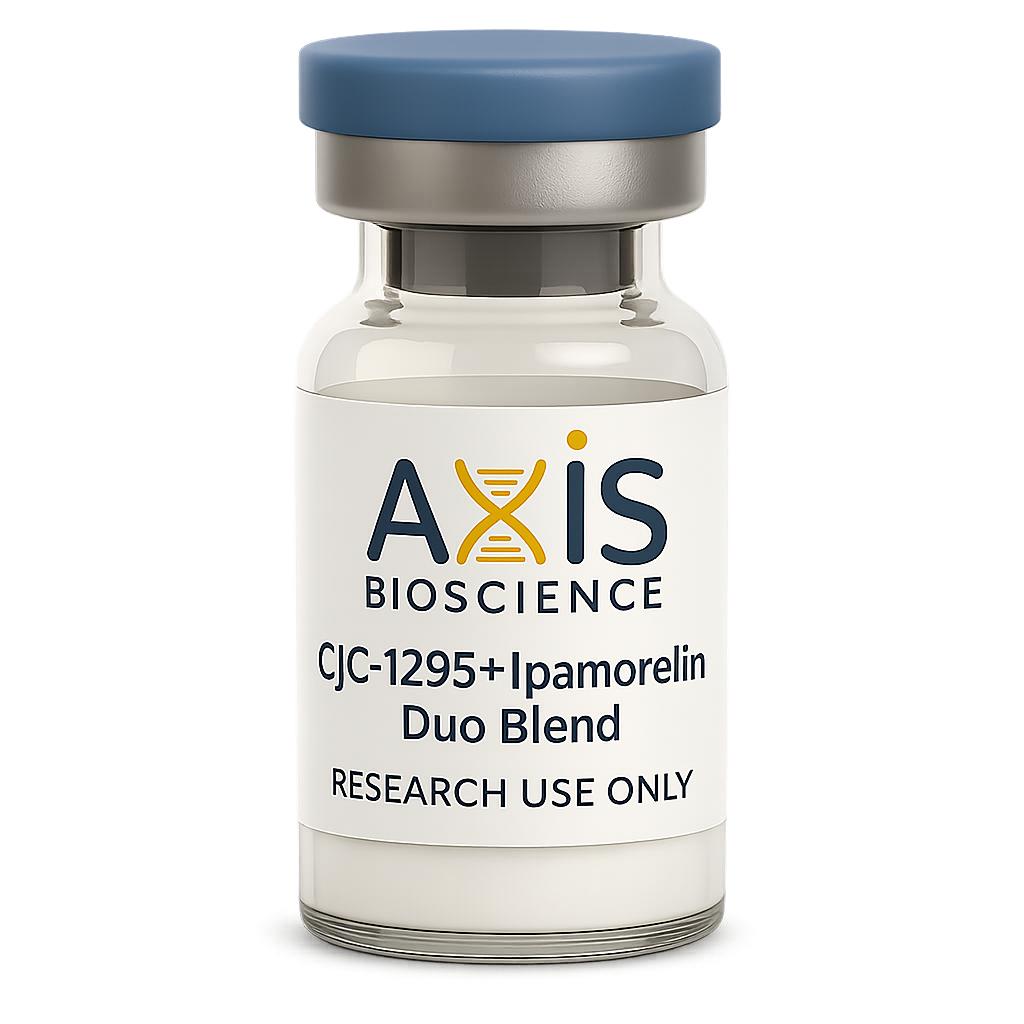
CJC-1295 (No DAC) + Ipamorelin is a combined research peptide formulation studied in laboratory models for growth hormone signaling, pituitary receptor activation, and endocrine pathway interactions. Supplied as a 5mg / 5mg lyophilized duo blend for research use only.
In stock (can be backordered)
| Quantity | Discount | Discounted price |
| 3 - 4 | 6% | $42.30 |
| 5 + | 10% | $40.50 |
Free shipping on orders over $200!
- Buy 3+ save 6% · Buy 5+ save 10%
- Secure Ordering
This Duo Blend contains CJC-1295 (No DAC) and Ipamorelin, two synthetic peptides frequently paired in laboratory and preclinical research exploring growth hormone (GH) signaling pathways.
CJC-1295 (No DAC) is a growth hormone–releasing hormone (GHRH) analog studied for its ability to stimulate pulsatile GH release through pituitary receptor interaction. Ipamorelin is a selective growth hormone secretagogue receptor (GHS-R) agonist studied for its role in modulating GH release with minimal activity on cortisol or prolactin pathways in research models.
When combined, these peptides are often examined together to explore synergistic effects on GH pulse amplitude and frequency in controlled research settings. This product is supplied as a lyophilized powder intended strictly for laboratory research use.
⚠️ Research Use Only – Compliance Notice
- Growth hormone signaling and pulsatility models
- Pituitary receptor activation pathways (GHRH and GHS-R)
- Endocrine system research and hormone regulation
- Muscle cell metabolism and recovery signaling studies
- Aging-related endocrine research models
- Body composition and metabolic research contexts
- Sleep-cycle and circadian GH-release pattern studies
CJC-1295 (No DAC)
Compound Name: CJC-1295 (No Drug Affinity Complex)
Amino Acid Length: 29
Molecular Formula: C152H252N44O42
Molecular Weight: ~3367.9 g/mol
CAS Number: 863288-34-0
Ipamorelin
Compound Name: Ipamorelin
Amino Acid Length: 5
Molecular Formula: C38H49N9O5
Molecular Weight: ~711.9 g/mol
CAS Number: 170851-70-4
Blend Form: Combined lyophilized powder
Solubility: Soluble in water under laboratory conditions
- Store at -20°C for long-term stability
- Refrigeration (2–8°C) acceptable for short-term storage
- Avoid repeated freeze-thaw cycles
- Protect from light and moisture
- Reconstituted material should be aliquoted to preserve integrity
- Handle using standard laboratory safety protocols