
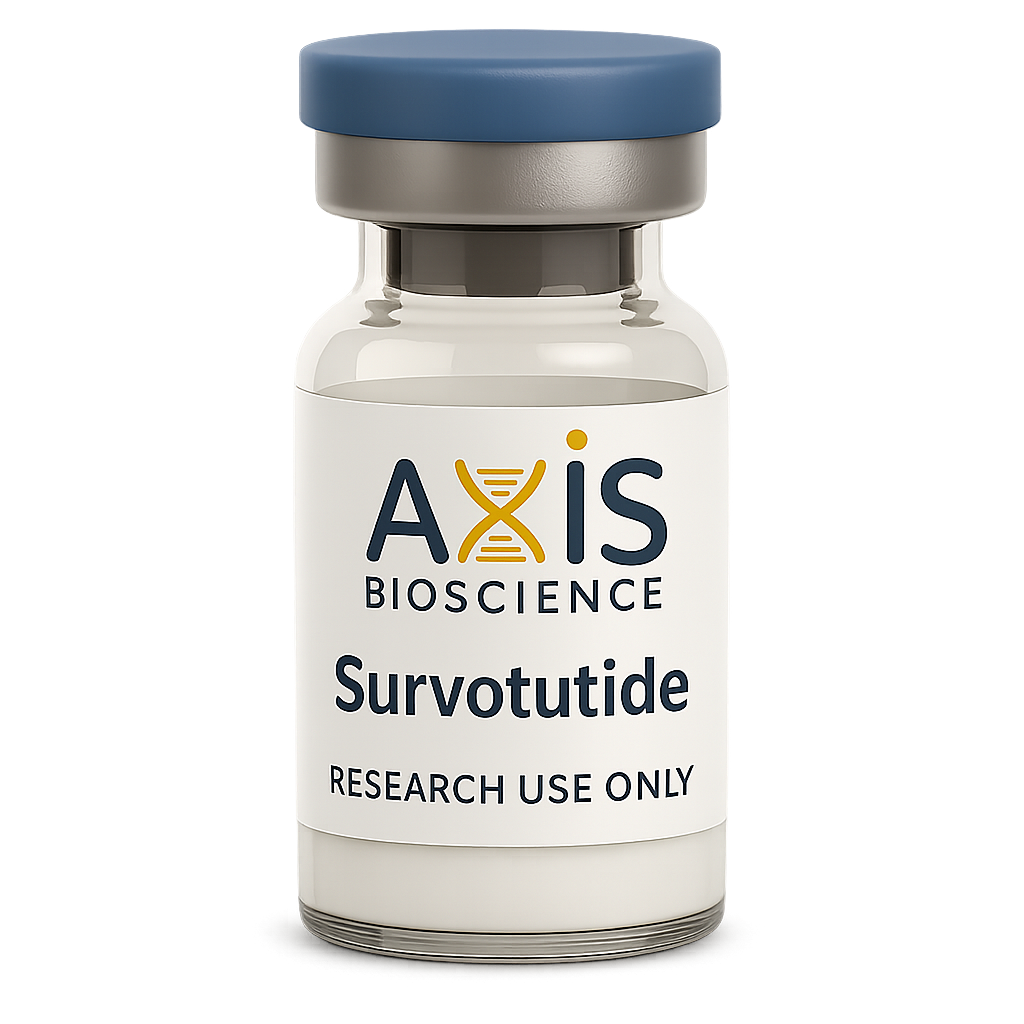
$138.00
Survodutide is a dual GLP-1 and glucagon receptor research peptide studied in laboratory and preclinical models for its role in metabolic regulation, energy balance, and integrated endocrine signaling pathways. Supplied as a lyophilized powder for research use only.
In stock (can be backordered)
| Quantity | Discount | Discounted price |
| 3 - 4 | 6% | $129.72 |
| 5 + | 10% | $124.20 |
Free shipping on orders over $200!
- Buy 3+ save 6% · Buy 5+ save 10%
- Secure Ordering
Survodutide 10mg is a synthetic peptide designed to function as a dual agonist of glucagon-like peptide-1 (GLP-1) and glucagon receptors. In laboratory and preclinical research settings, survodutide is studied for its role in metabolic signaling pathways that integrate glucose regulation, lipid metabolism, and energy expenditure.
By activating both GLP-1 and glucagon receptor pathways, survodutide serves as a research model for examining coordinated metabolic responses involving appetite regulation, hepatic metabolism, and energy balance. This dual-receptor profile differentiates survodutide from single-pathway GLP-1 receptor agonists in metabolic and endocrine research contexts.
This product is supplied as a lyophilized powder intended strictly for laboratory research use.
⚠️ Research Use Only – Compliance Notice
- Dual GLP-1 and glucagon receptor signaling
- Integrated glucose and lipid metabolism research
- Energy expenditure and metabolic efficiency models
- Appetite regulation and satiety signaling pathways
- Hepatic metabolism and fat oxidation studies
- Obesity-related metabolic pathway research
- Cardiometabolic and endocrine signaling contexts
Compound Name: Survodutide
Peptide Classification: Dual GLP-1 / Glucagon receptor agonist
Amino Acid Length: 29
Molecular Formula: C187H291N45O59
Molecular Weight: ~4145 g/mol
CAS Number: 2758011-35-5
Form: Lyophilized powder
Solubility: Soluble in water under laboratory conditions
- Store at -20°C for long-term stability
- Refrigeration (2–8°C) acceptable for short-term storage
- Avoid repeated freeze-thaw cycles
- Protect from light and moisture
- Reconstituted material should be aliquoted to preserve integrity
- Handle using standard laboratory safety protocols