$52.00
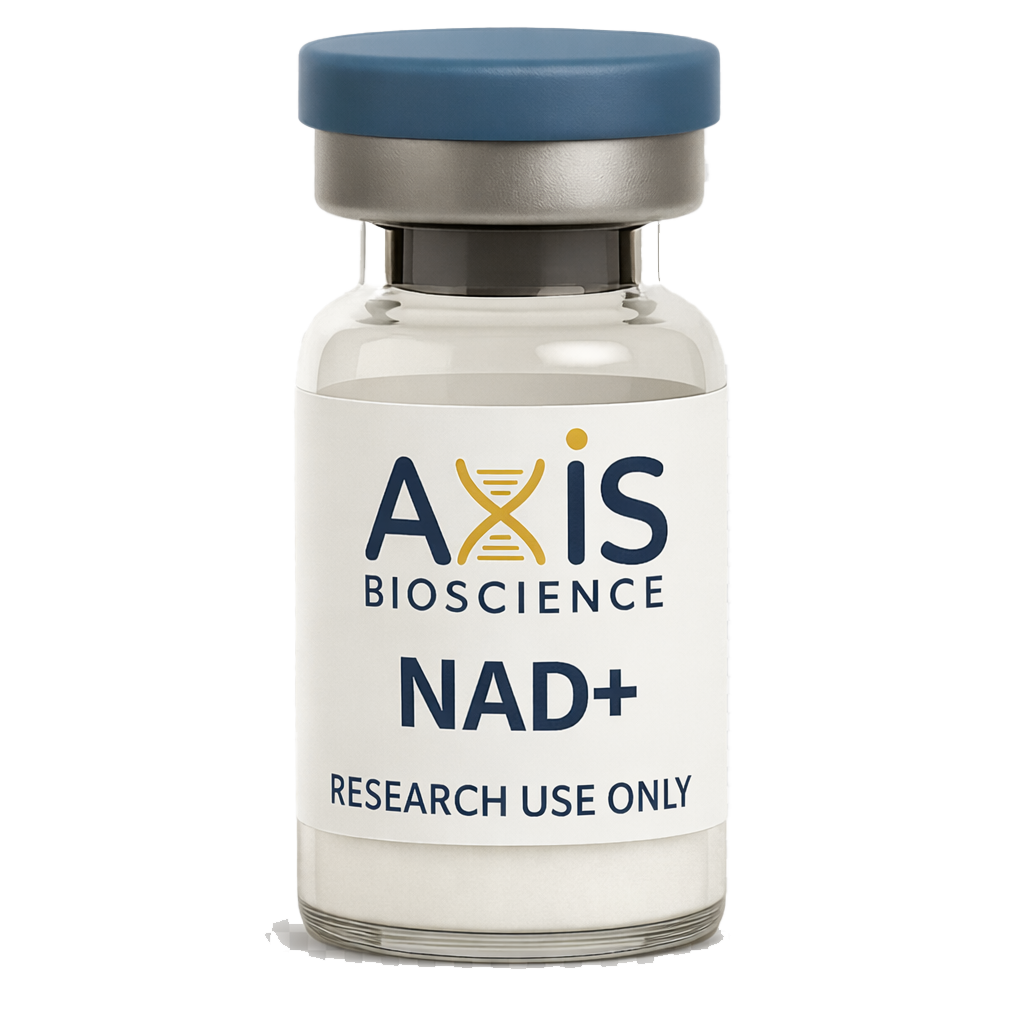
NAD+ (Nicotinamide Adenine Dinucleotide) is a fundamental cellular coenzyme studied in laboratory and preclinical research for its role in energy metabolism, redox signaling, mitochondrial function, and NAD+-dependent enzymatic pathways. Supplied as a lyophilized powder for research use only.
In stock (can be backordered)
| Quantity | Discount | Discounted price |
| 3 - 4 | 6% | $48.88 |
| 5 + | 10% | $46.80 |
Free shipping on orders over $200!
- Buy 3+ save 6% · Buy 5+ save 10%
- Secure Ordering
NAD+ (Nicotinamide Adenine Dinucleotide) 500mg is a naturally occurring coenzyme present in all living cells. In research and laboratory settings, NAD+ is widely studied for its essential role in cellular energy metabolism, redox reactions, mitochondrial function, and intracellular signaling pathways.
NAD+ exists in oxidized (NAD⁺) and reduced (NADH) forms and serves as a central electron carrier in metabolic processes. Due to its involvement in fundamental cellular functions, NAD+ is a frequent subject of research related to aging, cellular stress response, and metabolic regulation.
This product is supplied as a lyophilized powder intended strictly for laboratory research use.
⚠️ Research Use Only – Compliance Notice
- Cellular energy metabolism and ATP production pathways
- Redox signaling and electron transfer mechanisms
- Mitochondrial function and bioenergetics research
- Sirtuin enzyme activity and NAD+-dependent signaling
- DNA repair pathways involving PARP enzymes
- Cellular aging and oxidative stress models
- Neurobiology and muscle cell metabolism research models
Compound Name: Nicotinamide Adenine Dinucleotide (oxidized form)
Common Abbreviation: NAD⁺
Molecular Formula: C21H27N7O14P2
Molecular Weight: ~663.43 g/mol
CAS Number: 53-84-9
Structure: Dinucleotide composed of nicotinamide and adenine linked via phosphate groups
Form: Lyophilized powder
Solubility: Freely soluble in water under laboratory conditions
- Store at -20°C for long-term stability
- Refrigeration (2–8°C) acceptable for short-term storage
- Avoid repeated freeze-thaw cycles
- Protect from light and moisture
- Reconstituted material should be aliquoted and handled using standard laboratory protocols